
Introduction
In the late 1970s, Glasgow presented an unusual combination of circumstances. Much of the city was still served through lead pipework, while its drinking water came from Loch Katrine — a soft, poorly buffered supply with an untreated pH of around 6.3.[1] As that water passed through lead communication pipes, supply pipes and domestic plumbing, it could dissolve lead and carry it to the household tap. By 1977, surveys were finding exceptionally high concentrations in parts of the city.[1]
The concern soon extended beyond water quality. Investigators began measuring lead in the blood of pregnant women, newborn babies and infants, while examining the lead concentrations in the water supplied to their homes.[2] The resulting studies provided something considerably more important than evidence that Glasgow had a lead-pipe problem: they offered an opportunity to examine whether lead released from plumbing was making a measurable contribution to human exposure.
Glasgow then provided a second opportunity. From 1978, Strathclyde Regional Council altered the chemistry of the Loch Katrine supply, using lime treatment to reduce its plumbosolvency.[3,4] Much of the lead pipework remained, but the water passing through it became less capable of dissolving lead. Tap-water concentrations fell, and subsequent investigations recorded substantial changes in blood lead.[3] Studies of bottle-fed infants added another line of evidence, examining a group for whom household water could form a particularly important part of the diet.[5]
Taken together, these investigations turned Glasgow into an important case study in drinking-water epidemiology. The question is not simply whether lead was present in the city’s water, but what the evidence actually established about the relationship between lead at the tap and lead in the bloodstream of mothers and infants.
Table of Contents
Why Glasgow's Water Was Different
Glasgow’s lead problem began with an unusual combination of water chemistry and plumbing. The city’s principal supply came from Loch Katrine, an upland source whose water was naturally soft and poorly buffered. In 1976, the untreated water had a pH of approximately 6.3.[1] Unlike harder, more alkaline waters, it contained relatively little capacity to resist changes in acidity or to encourage the formation of stable protective deposits on the inside of metal pipes. In practical terms, it was highly plumbosolvent: when the water stood in contact with lead, lead could dissolve into it.
That chemistry mattered because Glasgow contained an extensive legacy of lead pipework.[6] Lead had been widely used for service connections and domestic plumbing, particularly in the city’s older housing. Water travelling from the distribution main to the kitchen tap could therefore encounter lead in communication pipes, private supply pipes and, in some properties, internal plumbing. The longer water remained in contact with those surfaces, the greater the opportunity for lead to enter solution.
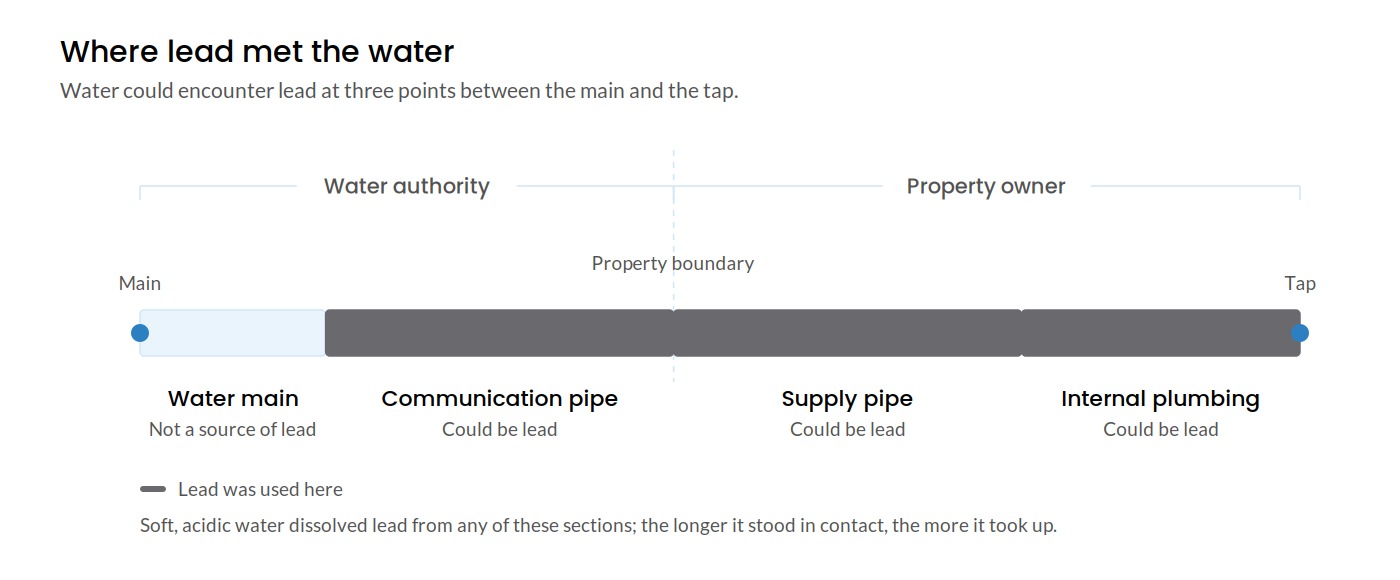
Figure 1. The water main was never a source of lead. The communication pipe, the supply pipe and internal plumbing could all be lead, and responsibility divided at the property boundary.
Neither part of this equation was unique to Glasgow. Lead plumbing existed throughout Britain, while soft upland waters supplied many parts of Scotland. What made western Scotland particularly important to the emerging research was the combination of the two. The 1975–76 national investigation found substantially more high lead concentrations in Scottish household water than in England or Wales, directing attention towards differences in source-water chemistry as well as differences in plumbing.[7,8]
Glasgow therefore demonstrated an important principle that would shape subsequent lead-control policy. The presence of a lead pipe did not, by itself, determine the concentration measured at the tap. The pipe provided the source of the lead; the chemistry of the water helped determine how readily that lead was released.[8] In Glasgow, an extensive stock of lead plumbing was being exposed to water particularly capable of dissolving it. The result was a city in which an old plumbing material became a significant drinking-water exposure problem.
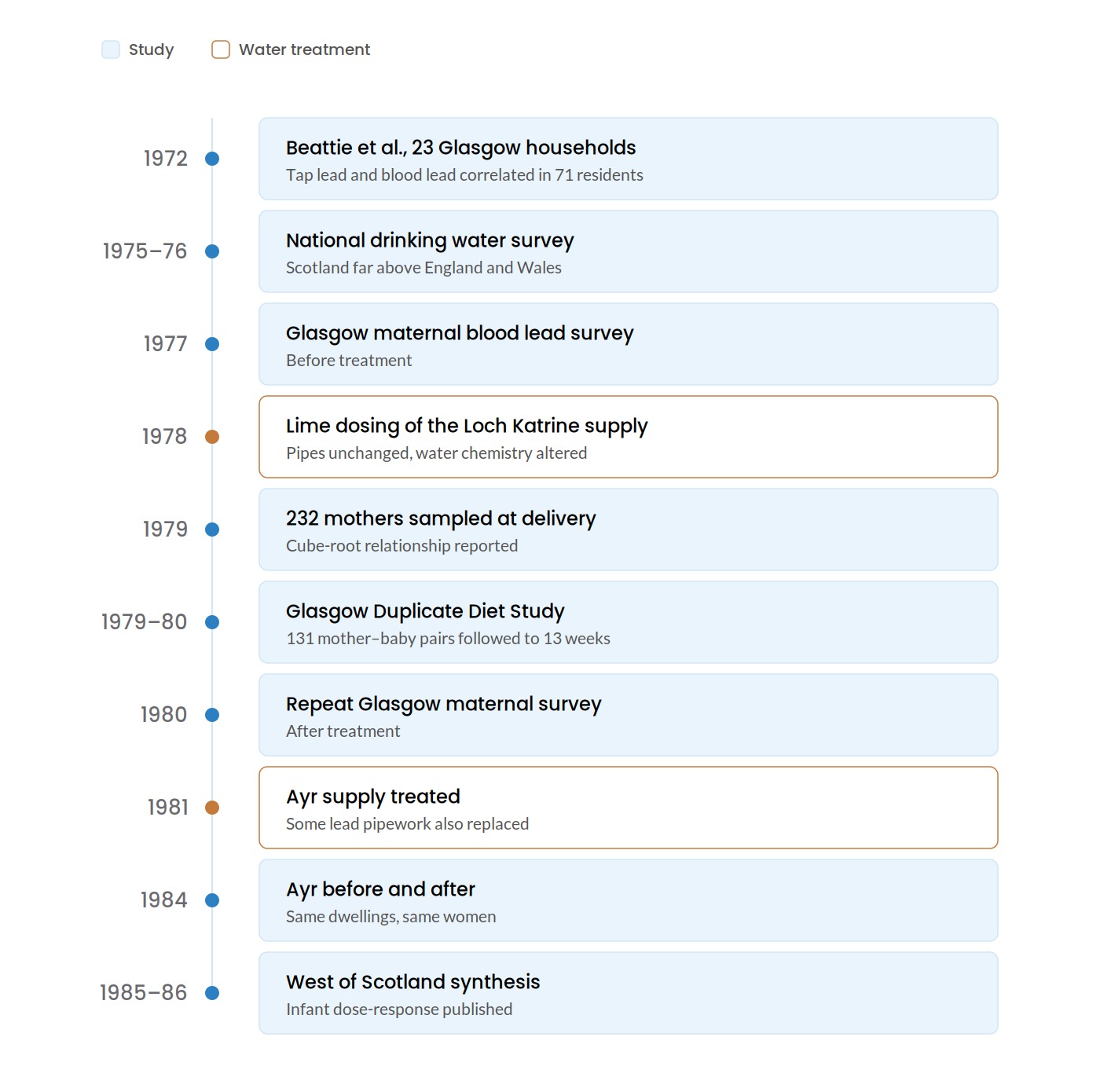
Figure 2. The Glasgow and Ayr investigations, 1972–1986. Studies in blue; the two water treatment interventions in amber.
Lead Exposure in Glasgow Homes
By the mid-1970s, the scale of the problem was becoming measurable. A national survey of drinking water in Great Britain in 1975–76 found a striking geographical contrast.[7] Lead was detected in household water across all three countries, but high concentrations were disproportionately concentrated in Scotland. Around 21% of Scottish households recorded random daytime lead concentrations of 100 µg/L or more, compared with approximately 2.6% in England and 2.3% in Wales.[7]
The survey used samples taken from household taps during normal daytime use rather than after a prescribed period of overnight stagnation.[8] This distinction matters. Lead concentration at a tap is affected by how long water has remained in contact with lead pipework and by the volume of water drawn. A random daytime sample therefore reflects the supply under ordinary patterns of use, but it does not represent the maximum concentration that might occur after prolonged stagnation.
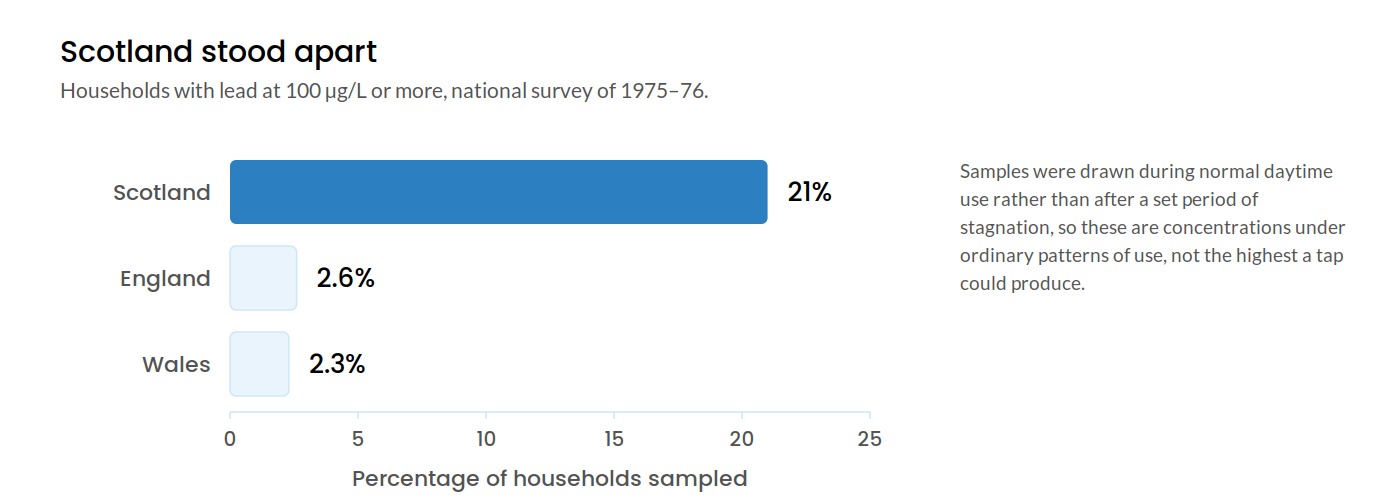
Figure 3. Households at 100 µg/L or more in the 1975–76 national survey. Samples were drawn during normal daytime use, not after a set stagnation period.
Within Glasgow, the problem was more severe still. An investigation of 23 Glasgow households published in 1972 found lead in water drawn from cold taps at up to eighteen times the then-acceptable limit, with the concentration proportional to the amount of lead present in the plumbing system.[9] In 1976, when the untreated supply had a pH of 6.3, only 45% of Glasgow samples complied with the then EEC limit of 100 µg/L.[22] The later Glasgow Duplicate Diet analysis likewise recorded that water-lead concentrations in the city were known to be often above 100 µg/L.[6,10] The distribution was not uniform: some properties had much lower concentrations while others produced substantially higher results. That variation was consistent with differences in plumbing configuration, the amount of lead present and the contact between water and lead before sampling.[1,8]
The significance of these measurements was therefore not simply that Glasgow occasionally produced an extreme result. A substantial part of the population was living in homes where lead released from plumbing could be measured in routinely drawn drinking water at concentrations that were high even by the standards of the period.
At this stage, however, the evidence established exposure at the tap, not exposure within the body. Finding lead in household water could show that residents had an important potential route of ingestion. It could not establish how much of that lead was actually being absorbed. To answer that question, investigators had to move beyond the kitchen tap and begin measuring lead in people.
The Evidence from Pregnant Women
Finding lead in Glasgow’s drinking water established a potential route of exposure. The more important question was whether that exposure could be detected in the people drinking it. The 1972 Glasgow household investigation had already given an early indication: among 71 residents of the houses examined, blood lead showed a significant positive correlation with the lead content of the water, while delta-aminolaevulinic acid dehydratase activity, a sensitive indicator of lead exposure, showed a significant negative correlation.[9] Pregnant women then provided evidence in a population of particular concern.[11]
Blood-lead surveys undertaken in Glasgow during the late 1970s found substantial variation between women according to the lead concentrations associated with their domestic water supplies.[2,12] In the 1977 investigation, 22.9% of the mothers studied had blood-lead concentrations above 1.06 µmol/L — approximately 21.9 µg/dL.[3] The threshold reflects the units and reference values used at the time; it should not be confused with a modern blood-lead intervention concentration.
The importance of the maternal work lay not simply in the prevalence of elevated blood lead. Investigators were able to examine blood measurements alongside information about lead in domestic water. Women exposed to higher water-lead concentrations tended to have higher blood-lead concentrations, providing evidence of a relationship between domestic water lead and internal exposure.[2] The 1979 analysis of 232 mothers sampled at delivery found maternal blood lead varying significantly with the cube root of domestic water lead, and found the relationship stronger with first-flush water lead than with running-water lead.[2] A later Glasgow paper reported two study populations — 236 mothers and their newborn infants, and 117 mothers with six-week-old children — in which blood lead again varied significantly with the cube root of domestic water lead.[12]
There was, however, an important epidemiological problem. Glasgow in the 1970s was not an environment in which drinking water was the only source of lead. Leaded petrol contributed to atmospheric contamination; lead could be present in household dust and old paint; diet provided another route of exposure; and industrial and occupational sources added to the wider background burden. Measuring a high blood-lead concentration in a woman living in a house with lead plumbing could not, on its own, establish how much of that concentration had originated in drinking water.
The investigators therefore had to distinguish a drinking-water contribution from this background exposure. The association between household water lead and blood lead was important because women living within the same wider urban environment could nevertheless experience very different water-lead concentrations. Other environmental sources remained relevant, but they could not readily explain why blood lead varied systematically with lead in domestic water.
Even so, these observations were still principally associational evidence. They showed that higher drinking-water lead and higher maternal blood lead occurred together, not that water accounted for the whole blood-lead burden. The much stronger test would come when Glasgow deliberately changed one part of the exposure system. If the chemistry of the water could be altered while the city’s lead plumbing and much of its wider environment remained in place, investigators could observe whether lead exposure changed with it.
Changing Glasgow's Water Chemistry
The evidence emerging from Glasgow pointed towards a practical intervention. If Loch Katrine water was dissolving lead as it passed through the city’s pipework, reducing the water’s plumbosolvency offered a way of reducing exposure without waiting for every lead pipe to be removed.
In 1978, Strathclyde Regional Council began treating Glasgow’s principal water supplies with lime.[4,6] Dosing was not fully effective from the outset. The raised pH was not maintained throughout the distribution system, and the plant was adjusted through successive increases during 1979 and again in August 1980.[18] The purpose was to raise the pH of the naturally soft, acidic water and make it less aggressive towards lead. Loch Katrine water, with an untreated pH of around 6.3, was brought towards a substantially less plumbosolvent condition.[1,6] The intervention therefore acted on the water rather than the source of the lead: it sought to reduce the amount released from existing pipework each time water passed through it.
That distinction is important. Glasgow’s lead plumbing did not disappear when treatment began. Lead communication pipes, private supply pipes and internal lead plumbing remained throughout the city. Pipe replacement was taking place, but the immediate population-wide intervention was a change in the chemistry of the public water supply rather than wholesale removal of the underlying lead infrastructure.[6]
This created an unusually informative set of circumstances. Before treatment, investigators had already measured high lead concentrations in household water and elevated blood lead in sections of the population. After 1978, essentially the same legacy plumbing was being exposed to water with different chemical characteristics.
The intervention therefore provided a test of the explanation that had emerged from the earlier studies. If Glasgow’s high water-lead concentrations were being driven substantially by the interaction between Loch Katrine water and lead plumbing, making that water less plumbosolvent should reduce the amount of lead reaching household taps. And if drinking water was making a material contribution to human lead exposure, a sufficiently large reduction at the tap should eventually be detectable in blood as well.
That is what the subsequent surveys were positioned to examine.[3,4]
What Happened After Treatment
The response to treatment was visible first in the water. As lime dosing altered the chemistry of the Loch Katrine supply, lead concentrations in Glasgow household water fell rapidly.[4,6] Compliance with the 100 µg/L limit rose from 45% of samples in 1976 to 83% in 1980, when lime was being dosed at 4 ppm and the supply pH had reached 7.8. By 1982, with dosing raised to 5 ppm and pH around 9.0, compliance was 99%.[22] The lead pipes had not disappeared; what had changed was the ability of the water to dissolve lead from them.
The more important question was whether this reduction at the tap was accompanied by a change in human exposure. The maternal surveys provided a striking comparison. In the 1977 study population, 22.9% of the women tested had blood-lead concentrations above 1.06 µmol/L, equivalent to approximately 21.9 µg/dL. By 1980, the corresponding proportion was reported to have fallen to approximately 1.4%.[3]
Those figures need to be interpreted carefully. They do not describe the same women being followed from 1977 to 1980, and therefore should not be presented as a longitudinal cohort in which individual blood-lead concentrations were observed falling after treatment. The 1977 sample comprised 236 mothers and the 1980 sample 475 mothers.[3,13] They represent population measurements made before and after the intervention. Nor can the entire reduction automatically be attributed to drinking water: Glasgow residents continued to receive lead from other environmental sources, and changes in housing or other background exposures may also have contributed.
The largest competing source was not moving in the same direction. Blood lead in adult women in Wales fell by more than 30% between 1972 and 1982, a period in which the lead content of petrol changed little while traffic flow rose steadily.[20] A Welsh study published in 1984 concluded that water contributed more to blood lead than air did.[21] That work came from a group whose statistical treatment of the water and blood relationship the Glasgow investigators disputed, so it is not neutral corroboration. It does show that the Glasgow reduction cannot simply be attributed to falling petrol lead over the same years.
Nevertheless, the sequence materially strengthened the evidence. Before treatment, Glasgow had plumbosolvent water, high household water-lead concentrations and elevated blood lead among the women studied. The water authority then intervened directly on one component of that pathway — the chemistry governing lead dissolution — and substantial reductions in water lead were followed by a pronounced reduction in the prevalence of high maternal blood lead.[3,6] Mean and median blood-lead concentrations fell by 51% and 60% respectively.[3,18]
That is considerably stronger evidence than a cross-sectional correlation between water and blood measurements alone. The intervention introduced temporality: the reduction in exposure followed a defined change capable of reducing lead release from plumbing. It also provided mechanistic coherence, because the observed direction of change was exactly what the plumbosolvency explanation predicted.
Glasgow still did not provide a perfectly controlled experiment. But the combination of the earlier exposure evidence and the post-treatment observations made drinking water increasingly difficult to treat as merely an incidental correlate of blood lead. Changing the water chemistry had changed the exposure pathway; what followed in the population was consistent with a substantial reduction in lead entering the body.
The Glasgow Infant Study
The maternal studies showed that lead in household water was associated with lead in blood, and the changes after treatment strengthened that evidence. But Glasgow offered another population in which the drinking-water pathway could be examined more closely: bottle-fed infants.
During 1979–80, investigators carried out what became known as the Glasgow Duplicate Diet Study.[14] The work formed part of a wider investigation into dietary lead exposure and followed a stratified cohort of 131 mothers and their babies, from antenatal registration until the infants were three months old.[5] Rather than relying only on measurements of lead at the household tap, the study was designed to examine what the infants were actually consuming and relate that exposure to lead measured in their blood.
The duplicate-diet approach was important. A duplicate of the food and fluids consumed by each infant could be collected and analysed, allowing investigators to estimate dietary lead intake rather than inferring exposure simply from the presence of lead plumbing. Household water was also examined through composite sampling, and venous blood samples provided a biological measure of the infants’ absorbed exposure.[5] The investigators could therefore compare several stages of the same pathway: lead in the domestic environment, lead entering the infant’s diet and lead measured in the bloodstream. A specific analysis was made of the bottle-fed infants at thirteen weeks.[5]
Bottle-fed infants were particularly informative because drinking water occupied a different place in their diet from that of an older child or adult. For an infant receiving formula prepared with tap water, household water could form a substantial proportion of everything consumed — later work estimated their diet as approximately 90% water.[10,15] Lead dissolved from domestic pipework could therefore enter the diet repeatedly through feeds prepared throughout the day.
This made the Glasgow infant investigation more than another survey of contaminated houses. The researchers were examining a population with a relatively direct and measurable route between household water and ingestion, while simultaneously measuring the biological marker of interest.
The study still could not isolate drinking water perfectly. Infants could receive lead from other dietary and environmental sources, and the duplicate-diet design was intended precisely to investigate those competing contributions. But it provided a substantially richer exposure assessment than a tap-water measurement alone.
The critical question was therefore no longer simply whether infants lived in homes containing lead-contaminated water. It was whether differences in that water exposure were reflected in differences in the amount of lead found in their blood. That relationship became one of the most important findings to emerge from the Glasgow investigations.
Lead Exposure in Bottle-Fed Babies
The importance of the Glasgow infant findings lay in the way drinking water entered the diet. For a wholly bottle-fed baby, tap water used to prepare formula was not simply one source of fluid among many. It could provide much of the infant’s daily water intake.[10] Where that water had acquired lead from domestic plumbing, repeated feeds created a direct route from the household supply into the infant’s diet.
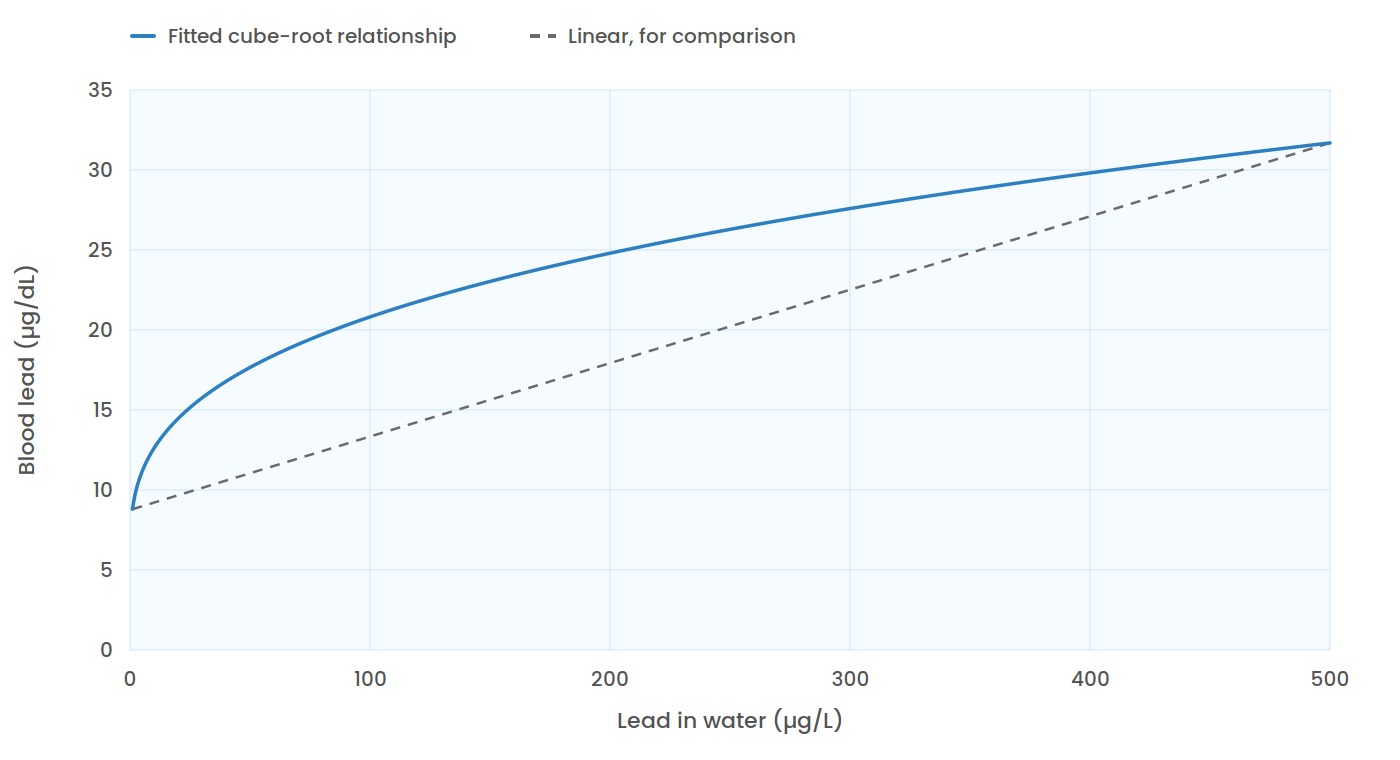
Figure 4. The fitted relationship reported for bottle-fed infants, blood lead = 5.5 + 3.3 × ∛(water lead), against a linear relationship through the same end points. The model accounted for about a quarter of the variation in blood lead (R² = 0.23, p < 0.01), so the curve describes an average trend rather than any individual child.
Investigators reported a clear relationship between the concentration of lead in household water and the concentration measured in blood. Infants from homes with relatively little lead in the water generally had lower blood-lead concentrations; as water-lead concentrations increased, blood lead also tended to increase. The relationship was statistically significant and remained evident when other potential sources of exposure were considered.[10,15] Wholly breast-fed infants, by contrast, showed a much weaker water-lead effect.[10]
Importantly, the relationship was not simply linear. The analysis described it as curvilinear: increases in water lead at the lower end of the exposure range produced proportionally greater changes in blood lead than equivalent increases at already high concentrations.[10] Expressed mathematically, the investigators reported an approximate relationship in which blood lead varied with the cube root of water-lead concentration.[10] In practical terms, this meant that doubling or tripling the concentration in drinking water did not produce an equivalent doubling or tripling of blood lead.
That shape matters. It shows why the Glasgow evidence cannot sensibly be reduced to a simple conversion factor between a concentration at the tap and a concentration in blood. Absorption, dietary intake, background exposure and biological handling all intervene between the two measurements. Yet the absence of a linear relationship did not weaken the central observation: higher lead concentrations in household water were associated with higher blood-lead concentrations in these infants.
The bottle-fed infants therefore supplied a particularly important piece of the Glasgow evidence. The maternal studies had identified an association between domestic water and blood lead at population level, while the treatment intervention showed that blood-lead distributions changed as the water problem was brought under control. The infant work approached the question from another direction, examining a group in which household water formed a large and identifiable component of intake.
No single Glasgow study proved that drinking water accounted for every part of an infant’s lead burden. Taken together, however, the exposure measurements and the observed dose-response relationship provided strong evidence that lead released from domestic plumbing was not merely present at the tap. It was entering the diet and contributing measurably to lead in the bloodstream.
Similar Evidence from Ayr
Glasgow was not the only Scottish community in which this sequence could be observed. Evidence from Ayr provided an important comparison because the town was supplied with water that was, if anything, even more aggressive towards lead.
Before treatment, Ayr’s water was exceptionally soft and acidic. In 1980 the supply had a pH of 5.4, and only 28% of samples complied with the 100 µg/L limit.[22] In properties containing lead plumbing, these conditions created substantial potential for lead dissolution. Investigations consequently found high concentrations of lead in domestic water together with elevated blood-lead concentrations among residents, and a cube-root relationship between water lead and blood lead fitted the data better than a linear one.[16]
The response again involved changing the chemistry of the supply. Treatment raised the pH from 5.4 to 8.6, and compliance with the 100 µg/L limit rose from 28% of samples to 95%. Geometric mean blood lead in the mothers studied fell from 20.5 to 9.5 µg/dL, and the proportion above 30 µg/dL fell from 22% to none.[22] Some lead pipework was also replaced, meaning that Ayr was not as clean an intervention on water chemistry alone as Glasgow.[6,13]
The design of the Ayr follow-up, however, makes it stronger evidence than a second cross-sectional comparison. Most of the before-and-after water measurements were made in the same dwellings, and most of the blood measurements in the same women.[17] Median blood-lead concentrations fell from approximately 21 µg/dL before intervention to around 13 µg/dL afterwards, and the women whose lead pipes had been removed all showed substantial decreases.[17]
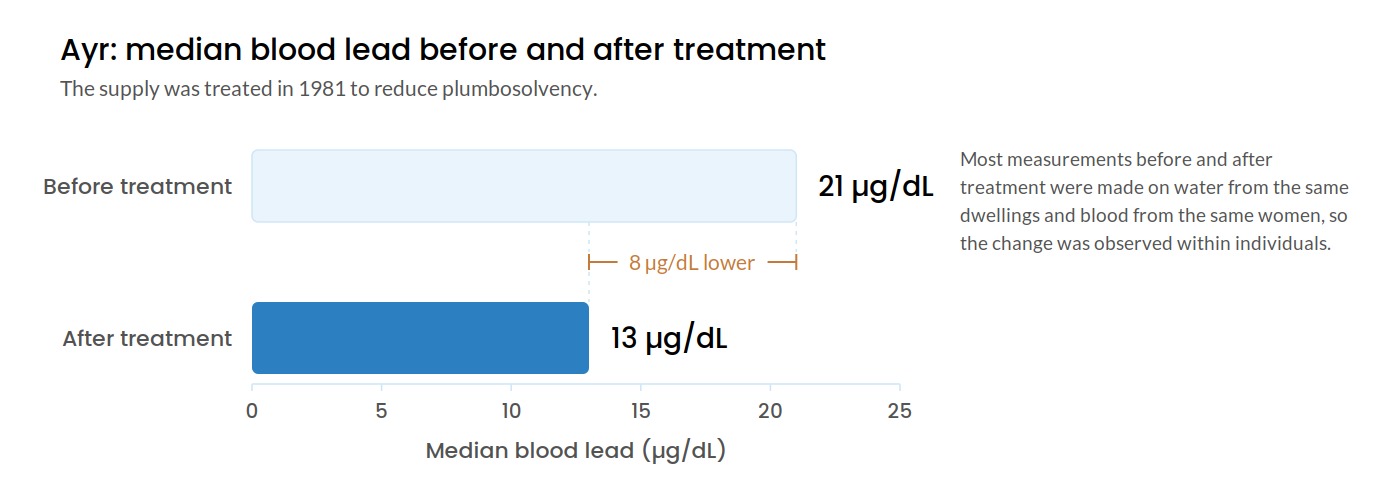
Figure 5. Median blood lead in Ayr before and after treatment. Most measurements were repeated in the same dwellings and on the same women.
That within-person and within-dwelling structure addresses a limitation that the Glasgow maternal comparison could not. In Glasgow, the 1977 and 1980 measurements came from different samples of women, so the fall in prevalence described a change in population distribution rather than an observed change in individuals. In Ayr, reductions in blood lead were recorded in the same people whose domestic water lead had fallen.
The two cases were not identical, and they should not be treated as though they were a single experiment. But Ayr made it considerably harder to explain the Glasgow observations as a local anomaly or as an artefact of comparing unlike populations. Under similar conditions elsewhere, changing the water-and-pipe exposure system was followed by lower lead concentrations in the blood of the individuals affected by that change.
From Water Treatment to Pipe Replacement
The Glasgow intervention demonstrated something important, but also exposed a distinction that would shape later Scottish policy. Reducing the amount of lead released from a pipe is not the same as removing the source of the lead.
By changing the chemistry of the Loch Katrine supply, Strathclyde substantially reduced the plumbosolvency of the water. Household water-lead concentrations fell and the evidence from mothers and infants indicated a corresponding reduction in human exposure.[6] Yet much of the lead plumbing responsible for that contamination remained physically in place. Treatment had altered the interaction between the water and the pipe; it had not eliminated the pipe itself.
That distinction explains why water treatment and pipe replacement should not be presented as competing responses to Scotland’s lead problem. Chemical treatment could act rapidly across an entire supply area, reducing exposure from large numbers of existing lead pipes simultaneously. Replacement addressed a different objective: permanently removing the material from which the lead originated.
Scottish policy increasingly incorporated both approaches.[13] Water treatment remained an essential means of controlling plumbosolvency, while lead communication pipes were progressively removed through planned and opportunistic replacement. Measures were also developed to encourage removal of lead from privately owned plumbing.
The progression followed logically from the evidence generated in Glasgow and elsewhere. The Scottish studies had shown that water chemistry could profoundly influence how much lead reached the tap — and therefore how much reached people. But they had also demonstrated why the problem existed in the first place. Plumbosolvency determined the release of lead; lead plumbing provided the source.
The point was tested directly. In 1993, after what the investigators described as maximal treatment to reduce plumbosolvency, a survey of 1,812 mothers in the Loch Katrine supply area found that 17% of households still had tap water at or above 10 µg/L, against 49% in 1981. Tap water lead remained the main correlate of raised maternal blood lead, accounting for 62% of cases above 5 µg/dL and 76% of cases above 10 µg/dL.[19] Treatment had reduced the problem substantially. It had not removed it.
Treatment could control the pathway. Removing the lead pipe removed one of its essential components.
What the Scottish Experience Established
No single Glasgow study demonstrated that drinking water was responsible for all of the lead measured in mothers or infants. Nor did the Scottish investigations establish that particular clinical outcomes were caused by lead from drinking water alone. Lead exposure in the 1970s came from multiple sources, including petrol, dust, paint and food, and those sources could not be removed completely from an observational population.
What the Scottish evidence provided instead was a series of findings that became progressively more difficult to explain without drinking water making a substantial contribution.
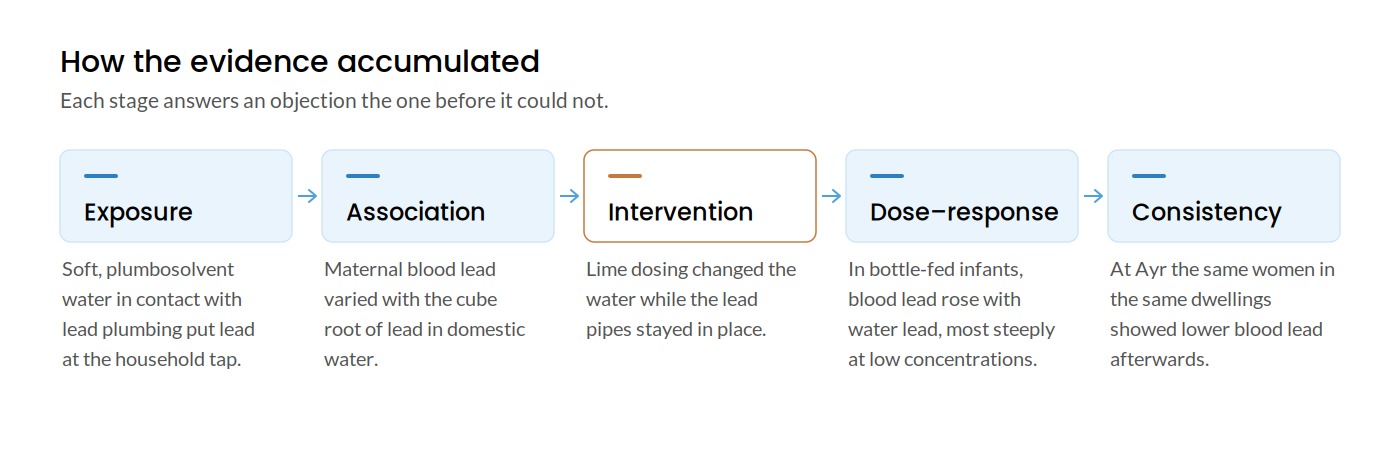
Figure 6. Each stage answers an objection the one before it could not.
First came exposure. Scotland, and Glasgow in particular, had unusually high concentrations of lead in household water where soft, plumbosolvent supplies came into contact with lead plumbing.[7,8] Then came association: women living with higher water-lead concentrations tended to have higher blood-lead concentrations, with maternal blood lead varying significantly with the cube root of domestic water lead across multiple Glasgow analyses and study populations.[2,12] The infant studies strengthened this further. Among bottle-fed babies, for whom household water could constitute a large proportion of intake, increasing water-lead concentrations were associated with increasing blood lead, with the analysis describing a statistically significant curvilinear dose-response relationship.[10,15]
The intervention evidence added temporality and biological coherence. Glasgow changed the chemistry responsible for dissolving lead from its pipework. Water-lead concentrations subsequently fell, and the proportion of women with blood lead above the contemporary reference concentration also fell markedly.[3,6] These were repeated population observations rather than the same individuals followed longitudinally, so the magnitude of the decline cannot be interpreted as a controlled individual treatment effect. But the direction and timing were consistent with the mechanism the investigators had proposed.
Ayr then added consistency, and did so with a stronger design. Under different but comparable circumstances, another population exposed to highly aggressive water and lead plumbing showed lower blood-lead concentrations after intervention on that exposure pathway — and because most of those measurements were repeated in the same dwellings and the same women, the reduction was observed within individuals rather than only between samples.[16,17]
Confounding therefore remained important, but became an increasingly incomplete alternative explanation. Petrol, dust, paint and diet could contribute to blood lead, but those alternative sources alone could not readily explain the combined pattern of household water associations, infant dose-response evidence, reductions following water-treatment intervention and similar observations elsewhere.
The Scottish studies consequently support a conclusion narrower than “water caused the blood lead”, but much stronger than “lead was found in the water”. They established a coherent body of epidemiological and intervention evidence that lead released from drinking-water plumbing was entering the human body and constituted a substantial source of lead exposure for affected populations.
Conclusion
Glasgow’s historical importance lies in more than the discovery of high lead concentrations in drinking water. By the late 1970s, researchers had begun to assemble the different parts of an exposure pathway that could previously have been considered separately: the chemistry of the source water, the presence of lead plumbing, the concentrations appearing at household taps, and the lead subsequently measured in human blood.[1,2,12]
The intervention made that evidence considerably stronger. When Strathclyde altered the chemistry of the Loch Katrine supply, the lead pipes did not suddenly disappear. What changed was the ability of the water to dissolve lead from them. Household water-lead concentrations fell, followed by substantial changes in the blood-lead measurements of the populations being studied.[3,4,6]
The evidence from bottle-fed infants provided another crucial connection. In infants whose formula was prepared with household water, investigators could examine a particularly direct route from contaminated water to dietary intake and then to blood. The observed relationship between water lead and infant blood lead reinforced what the maternal and intervention studies were already indicating.[5,10,15]
The Scottish studies did not establish that drinking water accounted for every component of blood lead, nor were they clinical trials capable of attributing individual health outcomes to water alone. Their importance was more fundamental.
Glasgow showed that the interaction between water and lead plumbing could be traced beyond the kitchen tap. It could be measured in the bloodstream of the mothers and infants drinking that water — and when the exposure pathway changed, the biological evidence changed with it.[2,3,5,10,12]
References
- Moore MR. Lead in drinking water in soft water areas — health hazards. Sci Total Environ. 1977;7(2):109–15. doi:10.1016/0048-9697(77)90002-X
- Moore MR, Goldberg A, Meredith PA, Lees R, Low RA, Pocock SJ. The contribution of drinking water lead to maternal blood lead concentrations. Clin Chim Acta. 1979;95(1):129–33. doi:10.1016/0009-8981(79)90345-0
- Moore MR, Goldberg A, Fyfe WM, Richards WN. Maternal lead levels after alterations to water supply. Lancet. 1981;2(8239):203–4. doi:10.1016/S0140-6736(81)90384-6
- Moore MR, Goldberg A, Fyfe WM, Low RA, Richards WN. Lead in water in Glasgow — a story of success. Scott Med J. 1981;26(4):354–5. doi:10.1177/003693308102600414
- Lacey RF, Moore MR, Richards WN. Lead in water, infant diet and blood: the Glasgow Duplicate Diet Study. Sci Total Environ. 1985;41(3):235–57. doi:10.1016/0048-9697(85)90144-5
- Moore MR, Richards WN, Sherlock JG. Successful abatement of lead exposure from water supplies in the West of Scotland. Environ Res. 1985;38(1):67–76. doi:10.1016/0013-9351(85)90073-8
- Department of the Environment, Central Unit on Environmental Pollution. Lead in Drinking Water: A Survey in Great Britain 1975–1976. London: HMSO; 1977. Figures quoted here are as reported in later summaries of that survey; the original pamphlet has not been consulted directly. Published summaries differ over the Scottish total above 50 µg/L (33% or 34.4%) and the English figure (7.8% or 10%), depending on sampling basis and whether Wales is included.
- Pocock SJ. Factors influencing household water lead: a British national survey. Arch Environ Health. 1980;35(1):45–51. doi:10.1080/00039896.1980.10667460
- Beattie AD, Moore MR, Devenay WT, Miller AR, Goldberg A. Environmental lead pollution in an urban soft-water area. Br Med J. 1972;2(5812):491–3. doi:10.1136/bmj.2.5812.491
- Sherlock JC, Quinn MJ. Relationship between blood lead concentrations and dietary lead intake in infants: the Glasgow Duplicate Diet Study 1979–1980. Food Addit Contam. 1986;3(2):167–76. doi:10.1080/02652038609373579
- Moore MR, Meredith PA, Campbell BC, Goldberg A, Pocock SJ. Contribution of lead in drinking water to blood-lead. Lancet. 1977;2(8039):661–2. doi:10.1016/S0140-6736(77)92528-4
- Moore MR, Goldberg A, Pocock SJ, Meredith PA, Stewart IM, MacAnespie H, Lees R, Low A. Some studies of maternal and infant lead exposure in Glasgow. Scott Med J. 1982;27(2):113–21. doi:10.1177/003693308202700203
- Akoumianaki I. Lead in Drinking Water: Public Health, Mitigation and Economic Perspectives. CREW CD2016/03. Scotland’s Centre of Expertise for Waters; 2017.
- United Kingdom Central Directorate on Environmental Pollution. The Glasgow Duplicate Diet Study (1979–1980): A Joint Survey for the Department of the Environment and the Ministry of Agriculture, Fisheries and Food. Pollution Report No. 11. London: HMSO; 1982.
- Quinn MJ, Sherlock JC. The correspondence between U.K. ‘action levels’ for lead in blood and in water. Food Addit Contam. 1990;7(3):387–424. doi:10.1080/02652039009373904
- Sherlock J, Smart G, Forbes GI, Moore MR, Patterson WJ, Richards WN, Wilson TS. Assessment of lead intakes and dose-response for a population in Ayr exposed to a plumbosolvent water supply. Hum Toxicol. 1982;1(2):115–22. doi:10.1177/096032718200100203
- Sherlock JC, Ashby D, Delves HT, Forbes GI, Moore MR, Patterson WJ, Pocock SJ, Quinn MJ, Richards WN, Wilson TS. Reduction in exposure to lead from drinking water and its effect on blood lead concentrations. Hum Toxicol. 1984;3(5):383–92. doi:10.1177/096032718400300503
- Troesken W. The Great Lead Water Pipe Disaster. Cambridge, MA: MIT Press; 2006.
- Watt GCM, Britton A, Gilmour WH, Moore MR, Murray GD, Robertson SJ, Womersley J. Is lead in tap water still a public health problem? An observational study in Glasgow. BMJ. 1996;313(7063):979–81. doi:10.1136/bmj.313.7063.979
- Elwood PC. Changes in blood lead concentrations in women in Wales 1972–82. Br Med J (Clin Res Ed). 1983;286(6377):1553–5. doi:10.1136/bmj.286.6377.1553
- Elwood PC, Gallacher JEJ, Phillips KM, Davies BE, Toothill C. Greater contribution to blood lead from water than from air. Nature. 1984;310:138–40.
- Moore MR. Influence of acid rain upon water plumbosolvency. Environ Health Perspect. 1985;63:121–6. doi:10.1289/ehp.8563121
Disclosure
This article is published by London & Surrey Water Services Ltd, a CIPHE member and WaterSafe registered contractor whose business includes lead pipe replacement. The company therefore has a commercial interest in the subject matter. The article is restricted to findings and positions reported in the sources cited, and no claim is made here that is not traceable to those sources. It is not medical advice. Readers concerned about lead exposure should speak to their GP, and readers concerned about lead in their own water supply should contact their water supplier or seek independent laboratory testing.